What a new boiler installation involves
The survey decides the size, not the old boiler. Replacing a 30kW boiler with another 30kW boiler because that is what was there is the most common mistake in the trade. The right size comes from the heat loss of the property and the hot water demand, which means counting radiators and asking how many bathrooms get used at once. An oversized boiler short cycles, which wastes gas and shortens its life.
The gas supply gets checked before anything is ordered. A new boiler needs a given gas rate at the appliance, and plenty of older Salford and Manchester properties still run 15mm pipe where 22mm is needed once the load goes up. Starve a modern boiler of gas and it will lock out intermittently, usually on the coldest day of the year. This is checked at survey, not discovered on install day.
Flue position is governed by rules, not preference. Minimum distances from opening windows and doors, and from boundaries, are set by the manufacturer's instructions and the gas regulations. Where a flue can go often decides where the boiler can go.
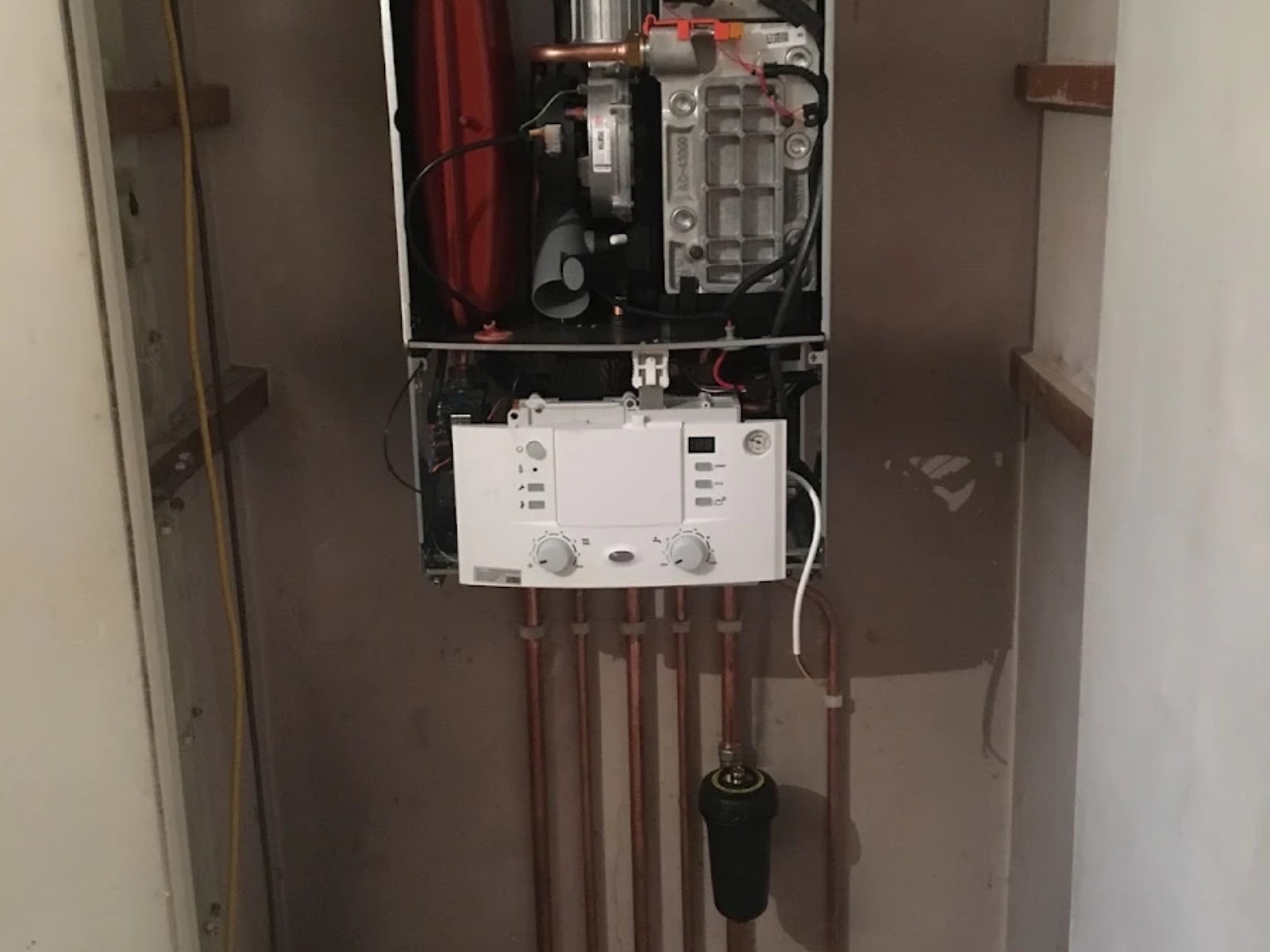
The system is cleaned before the new boiler goes on it. Years of circulating debris sit in the radiators and pipework. Put a new heat exchanger on a dirty system and it blocks. The system is flushed, an inhibitor is added, and a magnetic filter is fitted to catch what comes loose afterwards.
Commissioning is where the paperwork gets earned. The gas rate is measured, combustion is checked with a flue gas analyser, and the readings are recorded on the Benchmark checklist in the boiler manual. That checklist is what most manufacturers require to honour the warranty later.
The install is notified and registered. A boiler installation is notifiable under Building Regulations. It gets notified through Gas Safe, and the warranty is registered in the homeowner's name with the manufacturer.
What changes the cost of a new boiler
New boiler cost varies more than people expect. Two quotes for the same house can differ by a lot, and it is almost always one of these:
- Whether the boiler moves. Staying in the same place is the cheapest job on the list. Moving it means new gas, water, condensate and flue runs, plus making good afterwards.
- The flue run. A short horizontal flue through an external wall is straightforward. A long vertical run through a roof void is not, and may need access equipment.
- Whether the gas supply needs upsizing. If the existing pipe cannot carry the load, the run back to the meter has to be upgraded. On a mid terrace this can be the single biggest variable.
- The type of conversion. A straight swap is not the same job as a combi boiler installation replacing a regular system, which means removing the cylinder and tanks, capping the feeds, then making good the airing cupboard and the loft.
- The condition of the system. A chemical clean and a flush are not the same job, and a badly sludged system may need more than either.
- Controls. A basic programmer, a smart thermostat, or zoning the property are three different prices.
- Access. Loft conversions and tight cellars add time. So does nowhere to park.
What to check before you book a boiler installer
This applies to any boiler installer in Greater Manchester, not just us. It is worth five minutes before you accept a new boiler quote.
- Ask for the Gas Safe ID card and look at the back. The front proves registration. The back lists what the engineer is actually qualified to do, and boilers, flues and gas supply are separate qualifications. The licence number can be checked on the Gas Safe Register website in under a minute.
- Get the quote in writing, as a fixed price. A verbal estimate is not a quote, and "plus materials" is where the arguments start.
- Ask whether the install will be notified to Building Control. You should receive a Building Regulations compliance certificate after the work. If nobody mentions notification, that is a warning sign.
- Check the warranty is registered in your name. An unregistered warranty is worth nothing at the point you need it, and registration usually depends on the Benchmark checklist being completed and the boiler being serviced annually.
- Make sure the Benchmark checklist in the manual gets filled in and signed. It is the document a manufacturer asks for first when a warranty claim comes in.